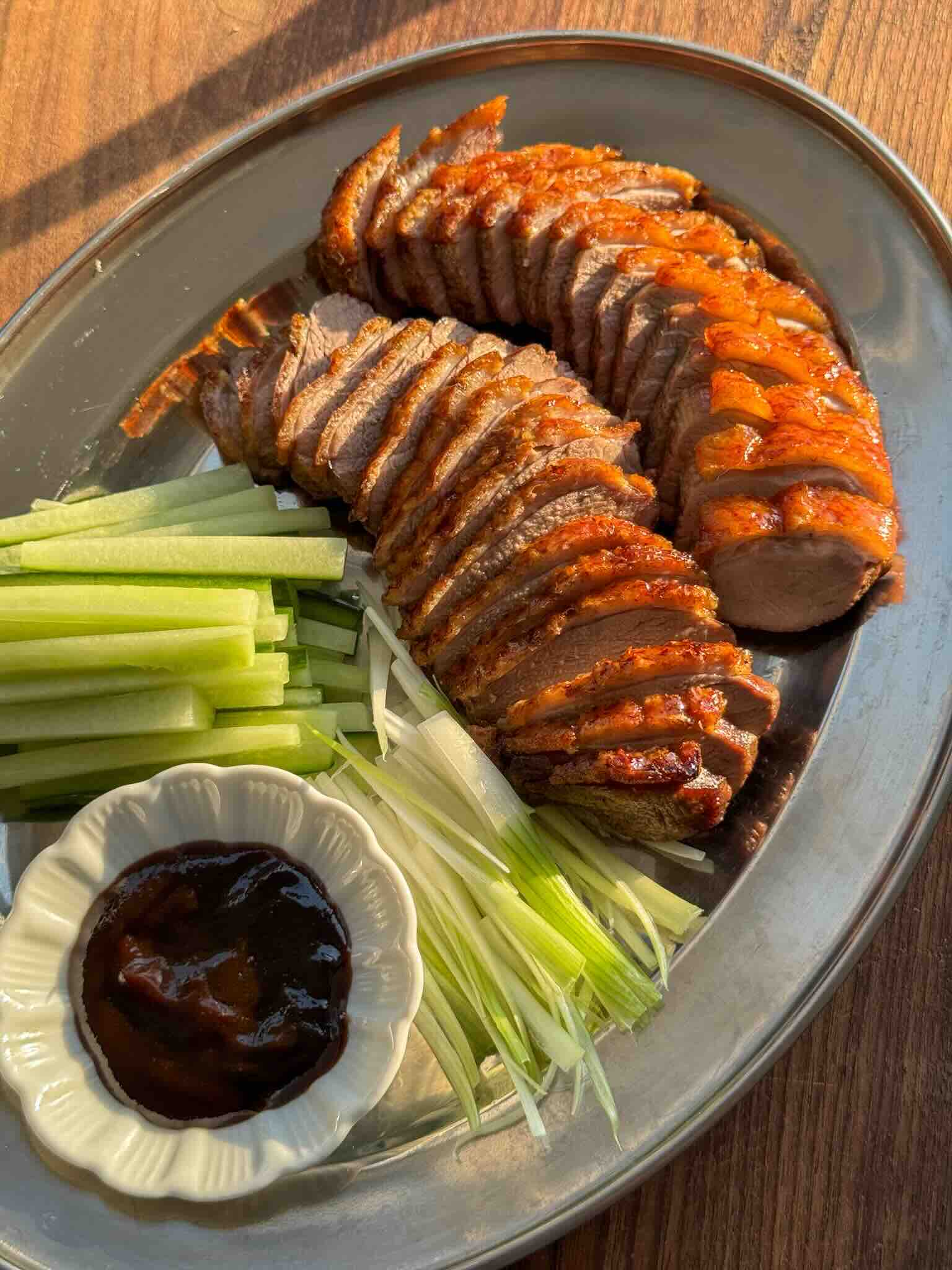
Easy Air Fryer Peking Duck (with Oven Instructions)
Think Peking duck is something you can only order at a restaurant?
This easy air fryer version delivers beautifully crisp skin and juicy duck with minimal fuss, making one of China's most iconic dishes surprisingly achievable at home.

Hey, I'm Verna!
About this recipe
What is Peking Duck?
Peking duck is one of China's most celebrated dishes, originating in Beijing and dating back to the Imperial era.
It's renowned for its beautifully lacquered, crispy skin, succulent meat and the theatrical way it's carved tableside before being served with delicate pancakes, spring onions, cucumber and sweet bean sauce.
Unlike Cantonese roast duck, where the focus is often on the flavour of the meat itself, Peking duck is all about achieving that impossibly crisp, paper-thin skin while keeping the meat underneath tender and juicy.
Traditionally, the ducks are air-dried for many hours before being roasted in specialised ovens, making it a labour-intensive dish that's often reserved for restaurants.
How To Do This At Home
As incredible as traditional Peking duck is, recreating it exactly at home can be quite a challenge.
Between sourcing maltose, hanging the duck to dry and using a dedicated roasting oven, it's not exactly the most beginner-friendly recipe.
This version keeps all of the flavours and textures that make Peking duck so special but simplifies the process using ingredients and equipment that are much easier to find.
The Substitutions
Instead of maltose, I use maple syrup to help the skin caramelise beautifully, alongside rice vinegar to encourage the skin to dry out during the overnight rest.
Rather than roasting in a traditional duck oven, the air fryer does an incredible job of rendering the fat and crisping up the skin whilst keeping the meat wonderfully juicy.
Instead of sweet bean sauce, which is traditional but hard to find outside of China and asian grocers, I've opted for hoisin sauce.
Yes, you'll still need to leave the duck uncovered in the fridge overnight, but that's hands-off time.
As I like to say, this recipe is easy... just not particularly quick!
Why You'll Love This Recipe
If you've ever wanted to make Peking duck at home but felt intimidated by the traditional method, this recipe is for you.
You'll get:
- Wonderfully crispy, golden skin
- Tender, juicy duck meat
- Simple supermarket ingredients
- No specialist equipment required
- Ready to serve with shop-bought pancakes, hoisin sauce, cucumber and spring onions for a restaurant-quality meal at home
It's proof that you don't need a commercial duck oven to enjoy one of China's most iconic dishes.
Top Tips
- Don't skip the overnight drying - it makes all the difference to the skin.
- Pat the duck dry before pouring over the boiling water.
- Let the duck rest before slicing to keep it juicy.
- Slice the cucumber and spring onions nice and thin for the best texture.
- Shop-bought pancakes are absolutely worth the shortcut.
Whether you're making it for a special occasion or simply want to recreate one of your favourite restaurant dishes at home, this approachable air fryer Peking duck proves that crispy skin, juicy meat and perfectly wrapped pancakes are well within reach.
Ingredients
For the duck
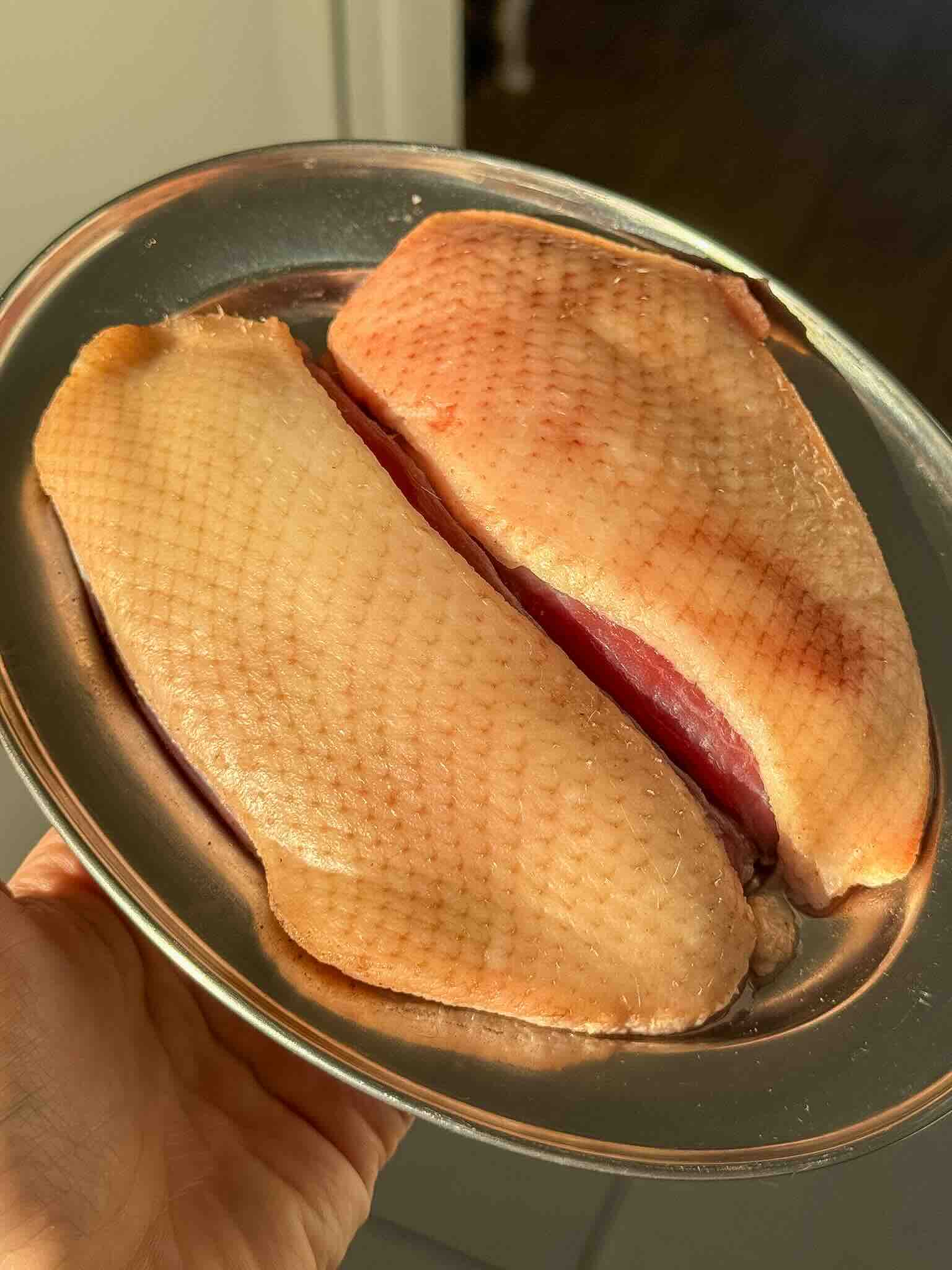
- 2 duck breasts (skin on)
- Boiling water
- ½ tsp Chinese five spice
- 1 tbsp Shaoxing cooking wine
- ½ tsp salt
For the skin glaze
- 1 tbsp maple syrup
- 1 tbsp white rice vinegar
To serve
- Duck pancakes (shop-bought)\
- Hoisin sauce
- ½ cucumber, cut into thin batons
- 2 spring onions, finely sliced
Pair it with


Instructions
1. Prepare the duck
Pour boiling water evenly over the duck skin. This helps tighten the skin and begins rendering the fat underneath, resulting in crispier skin once cooked.
Pat the duck completely dry with kitchen paper.
2. Season the duck
In a small bowl, mix together the Chinese five spice, Shaoxing wine and salt. Brush this mixture over the meat side of the duck only, taking care not to get any on the skin.
3. Glaze the skin
In a separate bowl, whisk together the maple syrup and white rice vinegar.
Brush the mixture evenly over the skin, applying 2–3 thin coats. Traditionally, Peking duck uses maltose syrup, but maple syrup is a fantastic substitute that still creates a beautifully caramelised finish.
4. Dry overnight
Place the duck skin-side up on a wire rack or plate and leave uncovered in the fridge for 24 hours.
This step is essential as it dries out the skin, helping it become golden and crisp during cooking.
5. Cook the duck
If you have an air fryer:
- Remove the duck from the fridge and place it skin-side up in the air fryer basket.
- Cook at 160°C for 10 minutes, then increase the temperature to 200°C for 5 minutes, or until the skin is deep golden and crisp.
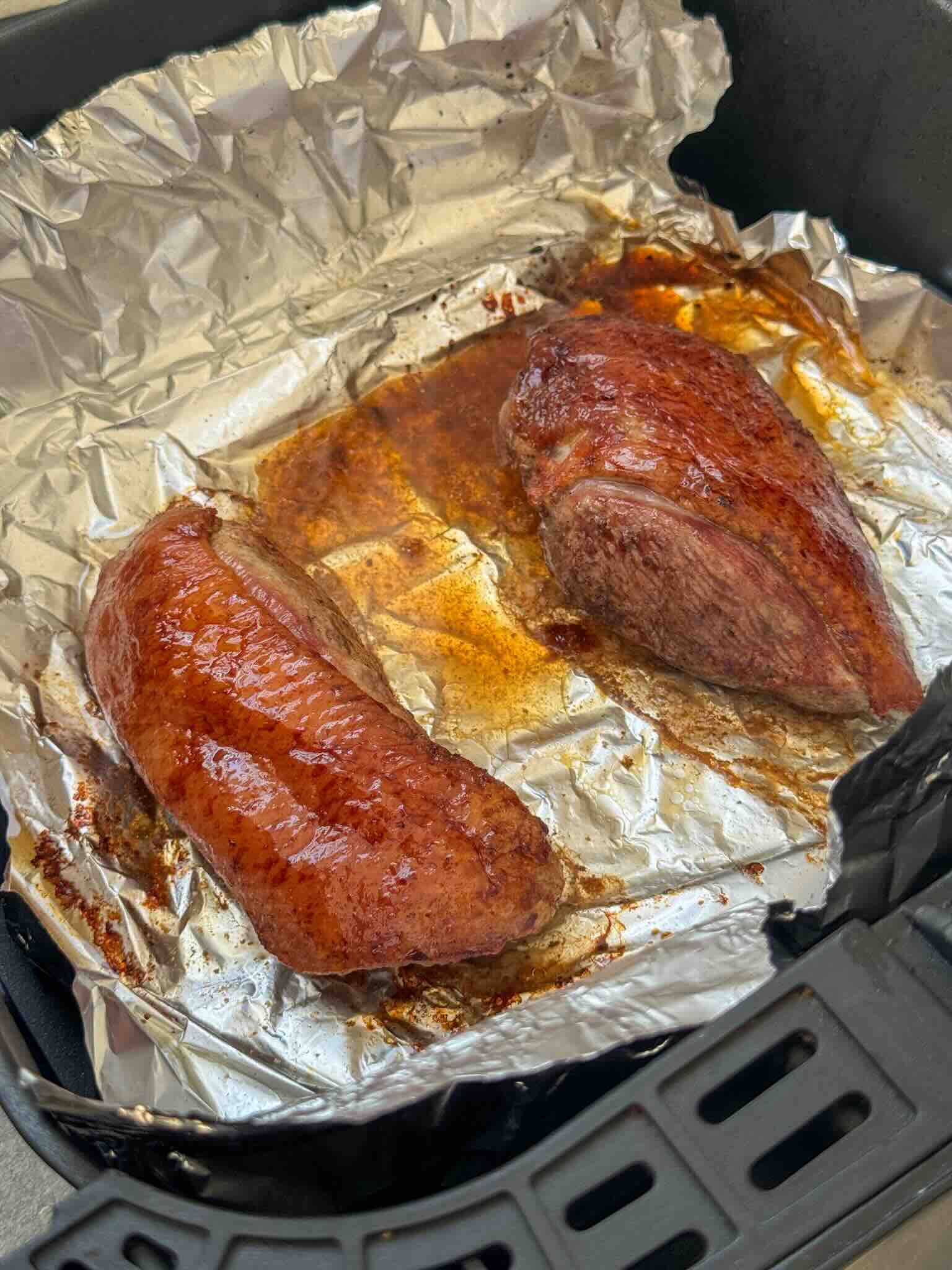
If you don't have an air fryer, you can roast the duck in the oven instead.
- Preheat the oven to 180°C fan (200°C conventional).
- Place the duck skin-side up on a wire rack set over a baking tray.
- Roast for 18–22 minutes, depending on the thickness of the duck breasts.
- For extra crispy skin, finish under a hot grill for 2–3 minutes, keeping a close eye to prevent burning.
Once cooked, transfer to a board and rest for 4–5 minutes before slicing.
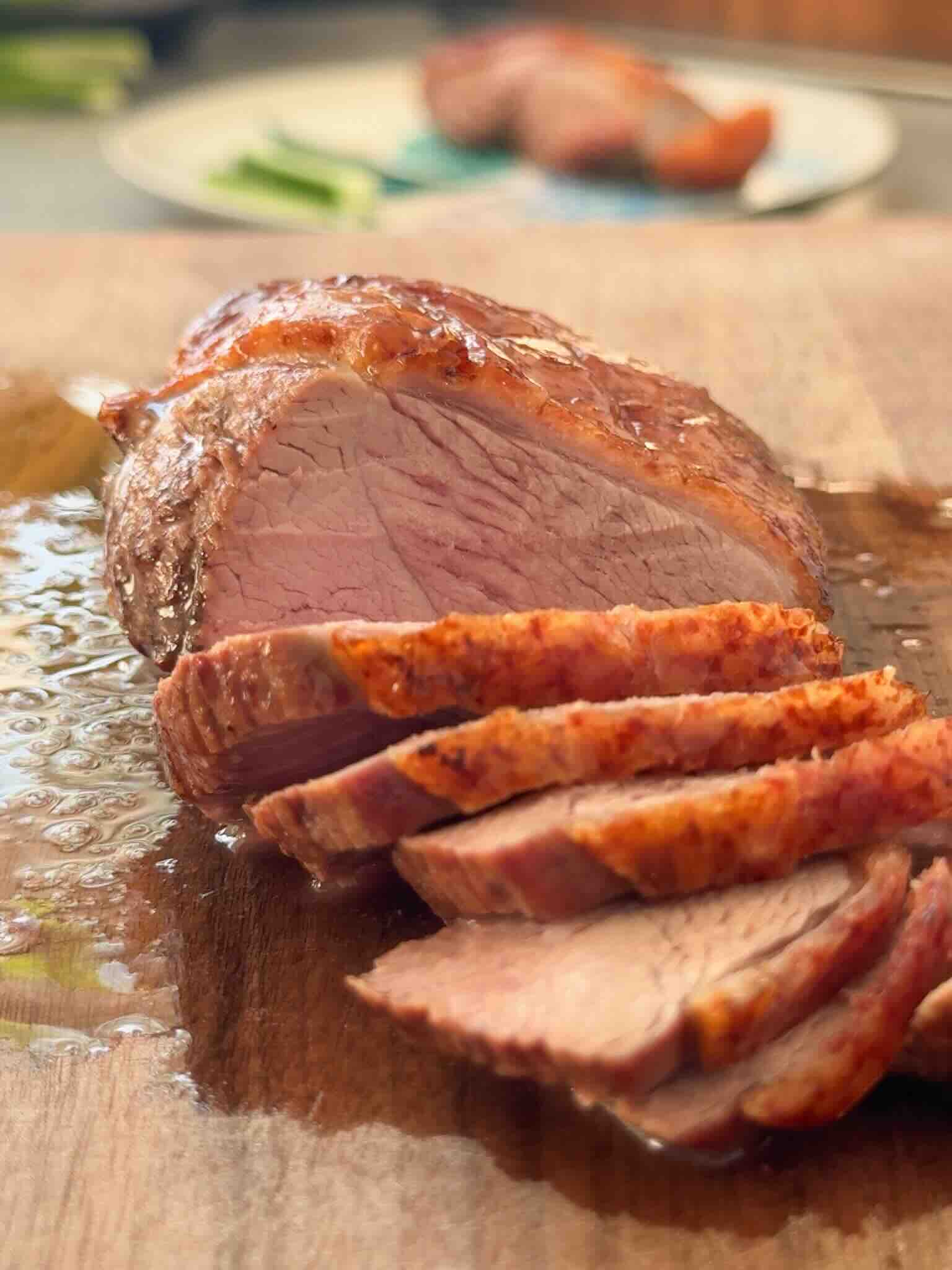
6. Prepare the accompaniments
While the duck cooks, warm the pancakes according to the packet instructions.
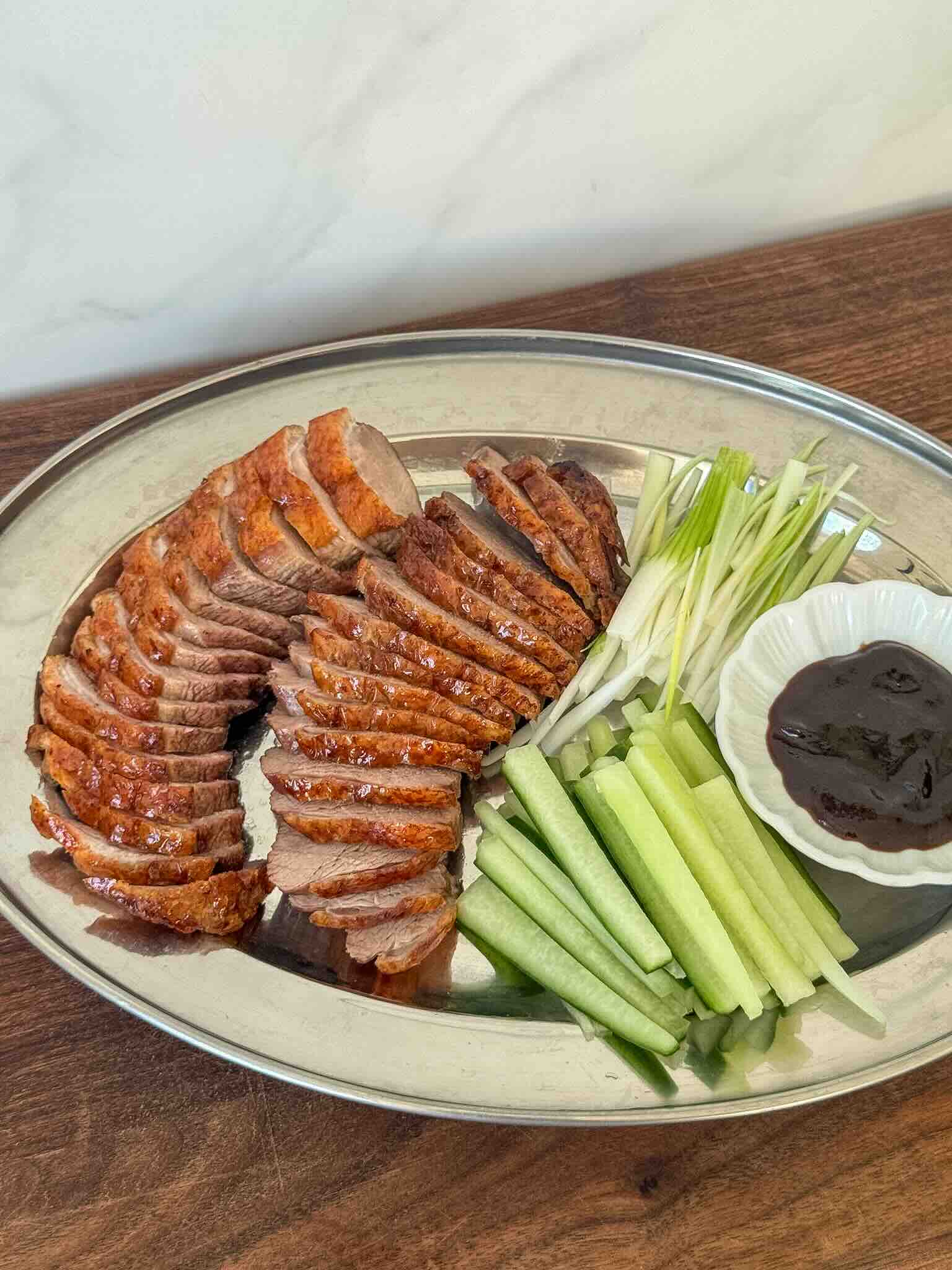
Slice the cucumber into thin batons, finely shred the spring onions and place the hoisin sauce into a serving bowl.
7. Assemble
Spread a little hoisin sauce over a pancake, top with slices of duck, cucumber and spring onions, then roll it up and enjoy while the duck is still warm.
Notes
- Don't skip the overnight drying. It's the single most important step for achieving crispy skin.
- Use a meat thermometer if you're unsure. Duck breast is best served medium, with an internal temperature of around 57–60°C, rising to 60–63°C as it rests.
- Slice against the grain for the most tender texture.
- If you can find sweet bean sauce (tianmianjiang), that's the traditional accompaniment, but hoisin sauce is a brilliant and much more accessible substitute.
FAQs
Why do you pour boiling water over the duck?
Pouring boiling water over the skin helps tighten it and begins rendering the fat underneath.
This encourages the skin to crisp up much more effectively during cooking.
Why leave the duck uncovered in the fridge overnight?
Drying the skin is one of the most important steps in making great Peking duck.
Leaving it uncovered allows moisture to evaporate, which helps create that signature crispy skin once cooked.
Why use maple syrup instead of maltose?
Traditional Peking duck uses maltose syrup to create its glossy, caramelised finish.
Maple syrup is a much more accessible substitute that still promotes beautiful browning whilst being readily available in most supermarkets.
Can I use hoisin sauce instead of sweet bean sauce?
Absolutely. Traditional Peking duck is served with sweet bean sauce, but hoisin sauce is much easier to find and offers a similar sweet, savoury flavour that's perfect for homemade Peking duck.
Can I make my own pancakes?
You can, but I usually use shop-bought duck pancakes.
They're surprisingly good, save a huge amount of time and achieve that thin, delicate texture that's difficult to replicate at home.
How do I know when the duck is cooked?
The skin should be deep golden and crisp, while the meat should remain juicy. After cooking, allow the duck to rest for 4–5 minutes before slicing to help retain its juices.
What's the difference between Peking duck and Cantonese roast duck?
Although both are roast duck dishes, they have quite different goals.
Cantonese roast duck focuses on deeply seasoned, flavourful meat, whereas Peking duck is prized for its incredibly crisp skin, which is often considered the highlight of the dish.
Video demonstration
Leave a comment
Like this recipe?
This recipe is featured in my debut cookbook "Have You Eaten?", if you liked this recipe, then I'd encourage you to buy my cookbook for even more exclusive and delicious recipes!
.webp)
More tasty recipe ideas for you
If you liked this recipe then you might like some of these below! Or if you're looking for more inspiration, my cookbook has dozens of exclusive meals not on my website!