


Noodle Recipes
I could eat noodles every day. I nearly do.
There's a noodle for every mood - slippery udon when you need comfort, thin somen when it's too hot to cook, chewy rice noodles when you want something lighter, instant ramen when you need dinner in four minutes.
This is my guide to getting the most out of all of them.
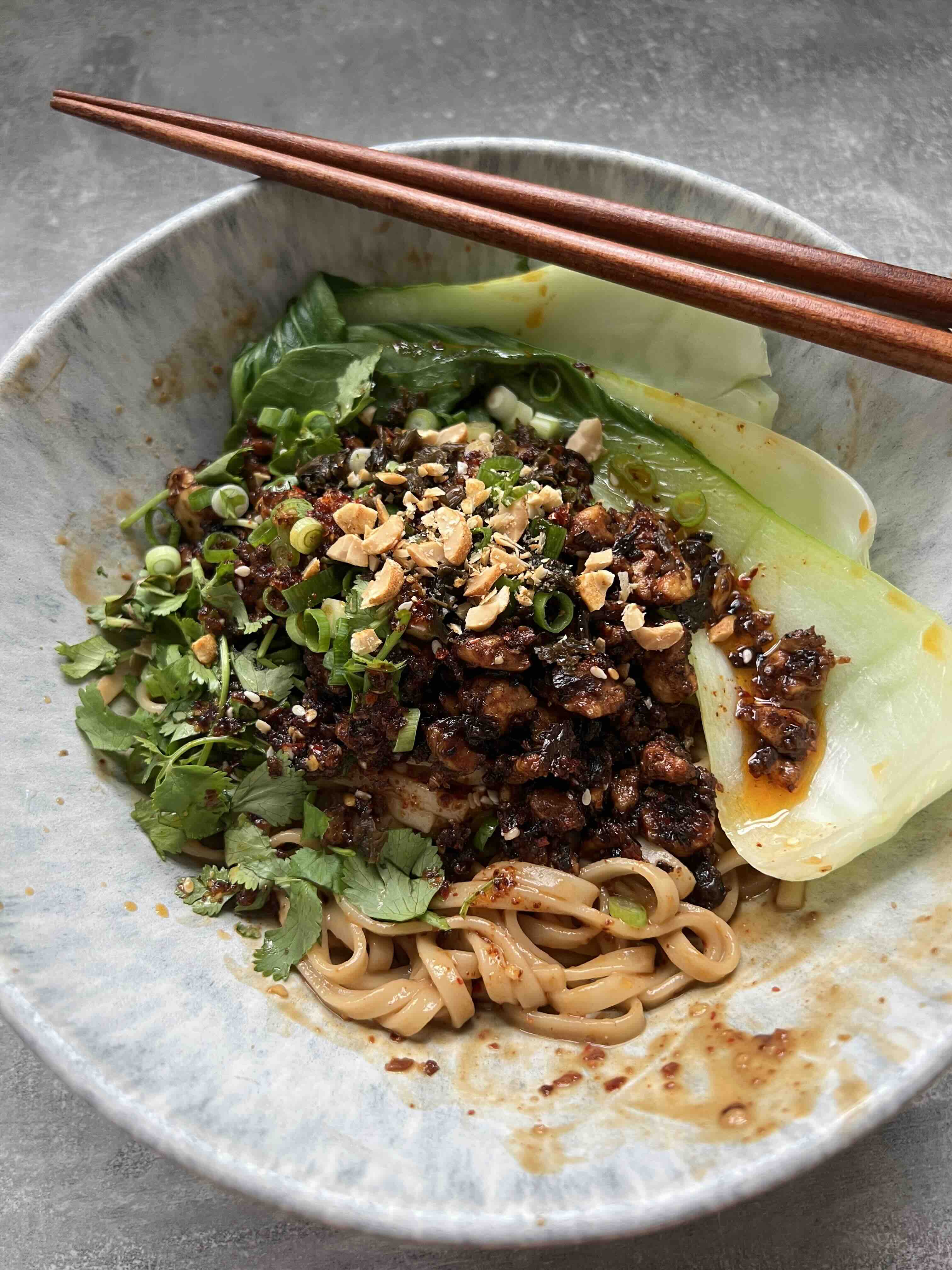
The Noodles Worth Knowing
Not all noodles are interchangeable. Here's what to keep in your pantry and when to use each one:
- Udon: Thick, chewy, wheat-based Japanese noodles. Brilliant in hot broths, cold with dipping sauce (zaru udon), or stir-fried (yaki udon). Fresh or frozen udon has noticeably better texture than dried.
- Soba: Thin buckwheat noodles with an earthy, nutty flavour. Served cold with dipping sauce in summer, or warm in a light dashi broth. Don't overcook — they turn mushy fast. Rinse well after cooking.
- Ramen: Springy wheat noodles with a slightly alkaline chew from kansui. Made for rich broths but also great in stir-fries. Fresh or frozen is far better than the dried blocks in instant packets.
- Glass noodles (dangmyeon): Korean sweet potato starch noodles used in japchae. Chewy, bouncy, and excellent at absorbing sauce. Soak in water before cooking.
- Rice noodles: Light, gluten-free, available in various widths. Wide ones (like pad see ew) for stir-fries; thin vermicelli for salads, spring rolls, and soups.
- Instant noodles: Genuinely useful in a good way — the noodle block from a packet of shin ramen cooks perfectly in three minutes. Ditch the sachet and make your own sauce.
How to Cook Noodles Properly
The most common mistake is not using enough water. Noodles need space to move or they stick together and cook unevenly. Use a large pot, plenty of water, and stir immediately when they go in.
For most noodles: cook until just tender (al dente), drain, and rinse with cold water to stop cooking and remove excess starch. The cold rinse is especially important for soba and rice noodles.
For udon in soup: skip the rinse and add straight to the broth — the starch helps the soup cling to the noodles.
Leftover cooked noodles stick together overnight. To revive them: pour boiling water over the tangle, leave for 30 seconds, drain. They'll separate.
The All-Purpose Noodle Sauce
This covers about 80% of quick weeknight noodle situations:
- 2 tbsp soy sauce
- 1 tbsp sesame oil
- 1 tbsp rice vinegar
- 1 tsp honey or sugar
- 1 tsp gochujang or chilli oil (optional but good)
- 1 garlic clove, grated
Mix, toss with hot cooked noodles, add whatever protein or vegetables you have. Done in the time it takes to boil the water.
Five Noodle Dishes to Make This Week
- Yaki udon: stir-fry leftover vegetables with frozen udon, soy sauce, and oyster sauce — dinner in 10 minutes
- Cold soba with a dipping sauce of soy, mirin, and dashi — the best hot weather meal
- Instant ramen upgrade: use the noodle block only, make a simple broth with soy, sesame, and a soft-boiled egg
- Glass noodle stir-fry (japchae-style): soaked dangmyeon, spinach, mushrooms, soy, sesame oil, a pinch of sugar
- Peanut noodles: rice noodles tossed in peanut sauce with cucumber, spring onions, and chilli
Recipe Inspiration For You...
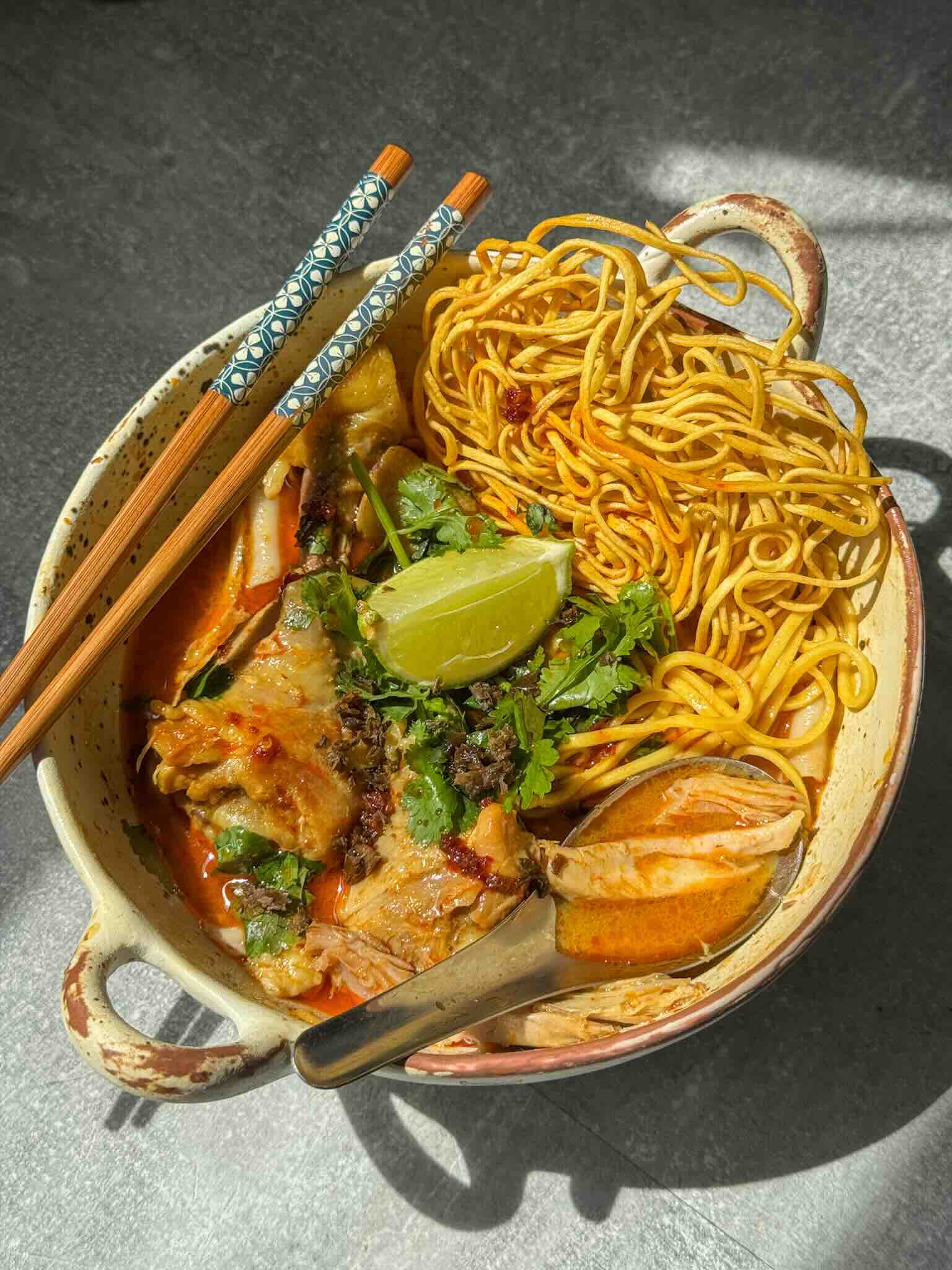
Easy Chicken Khao Soi (Thai Coconut Curry Noodle Soup)
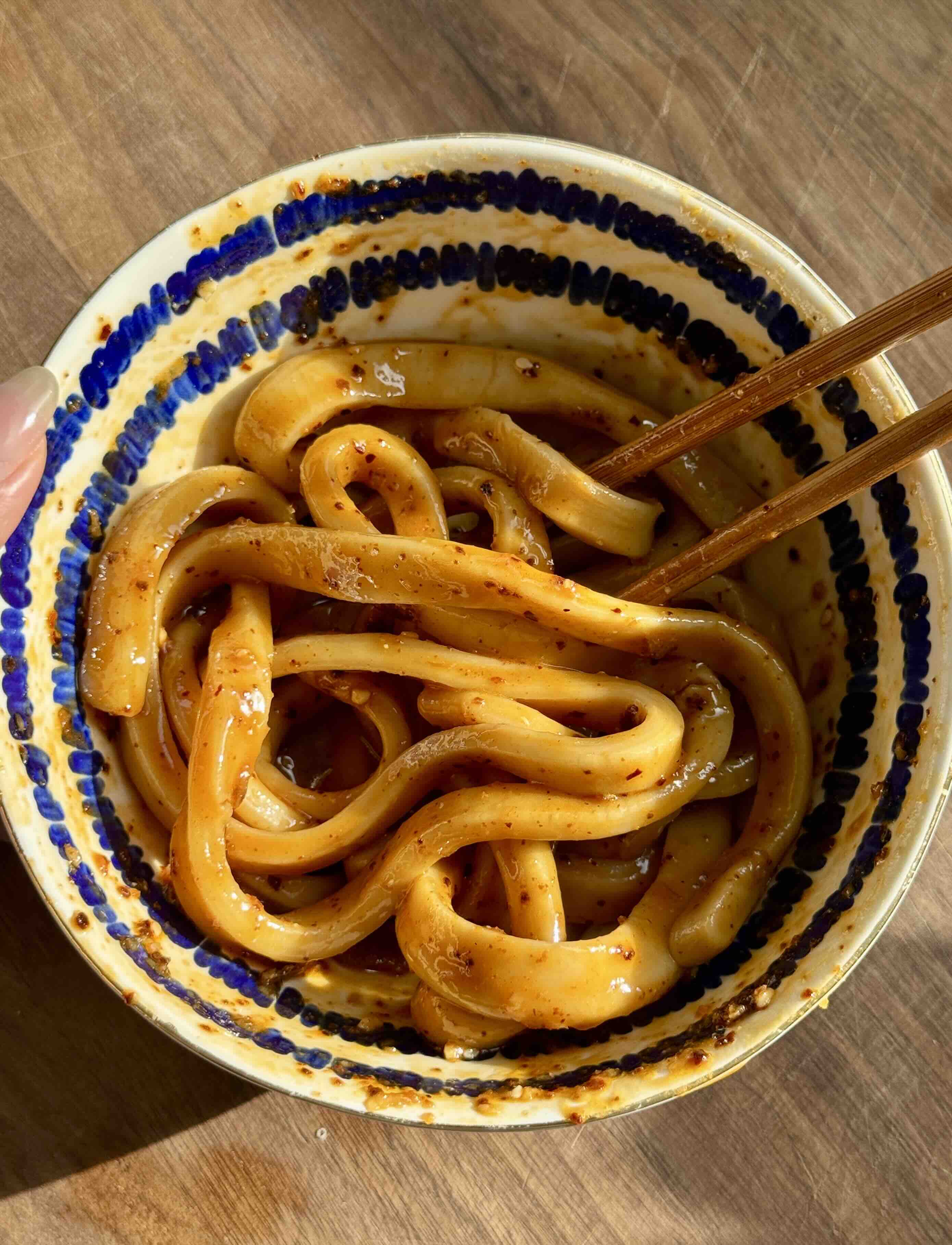

10-Min Shanghai Spring Onion (Scallion) Noodles (葱油拌面)

15-Min Miso Mushroom Udon Soup


Poached Pork Belly Noodles

Frequently Asked Questions
What's the difference between udon and ramen noodles?
Udon are thick, pillowy wheat noodles with a mild flavour and satisfying chew - they work in light or rich broths and stir-fries equally well.
Ramen noodles are thinner, springier, and have a distinctive alkaline chew from the kansui used in production.
Ramen noodles are better suited to rich, seasoned broths where their flavour complements the broth; udon is more versatile and forgiving.
Can I substitute one noodle for another in recipes?
Sometimes, but not always. Udon and ramen can often swap in hot dishes. Soba is harder to substitute because its earthy flavour is part of the dish.
Rice noodles and glass noodles cook differently and have distinct textures - they're not really interchangeable with wheat noodles.
When in doubt, the closest match is usually another noodle of similar thickness.
How do I stop noodles sticking together after cooking?
Rinse with cold water immediately after draining to remove surface starch.
If they're going into a hot dish straightaway, a light toss with sesame oil prevents sticking.
Noodles stored in the fridge overnight can be revived by pouring boiling water over them and draining - they'll loosen up within a minute.
Are instant noodles worth using?
The noodles in a packet of quality instant ramen (Shin Ramen, Nongshim Bowl Noodle) are genuinely good - springy, flavourful, and cook in three minutes.
The seasoning sachets are very salty and not always worth using.
A good approach: use the noodles, discard the sachet, and season your own broth. You get the convenience without the sodium overload.
What noodles are gluten-free?
Rice noodles (all varieties) and glass noodles (dangmyeon, mung bean vermicelli) are naturally gluten-free.
Soba can be gluten-free if made with 100% buckwheat, but many brands mix in wheat flour - check the label. Udon and ramen are wheat-based and not gluten-free.
Have You Eaten?
My first cookbook is now available to purchase and I couldn't be happier to share it with you! If you like what you see here, please go and check out my book for even more food for you to try!
.webp)